
What matters to us and why…
The Gospel
The word “gospel” means “good news”. This good news is centred around the person of Jesus, God the Son, who existed before time, became human, died for the sins of humanity, was buried, and rose from the dead on the third day, who is now ruling as the exalted King, and who will return as Judge, to make all things new. “Jesus is King” is the good news, and this is huge good news for us! When Jesus began his ministry, he called people to repent (to turn away from sin and self-rule), and to follow him and live under his rule. The good news is that for all who choose to come under his rule and reign, there is forgiveness of sin, restoration of relationship with God, and the promise of full life in him which begins now and is fully realised in eternity.
Grace
God is a gracious God. He leans in towards humans to share the benefit of all that he is, even when and especially when we don’t deserve it. Salvation, forgiveness, redemption, union with Jesus – we deserve none of this, nor can we earn it. This is a free gift! But this free gift isn’t just an abstract belief. It has significant implications for how we live as individual disciples of Jesus and together as his people. On the one hand, grace means we are free to be open and transparent about our failures, recognising we are all in the process of being transformed. We don’t need to hide, but can honestly bring the dark parts of our lives out into the light to receive grace. Secondly, grace keeps us from being a community oriented around rule-keeping. Rule-keeping is burdensome, and cannot produce genuine Christlikeness; but grace can and does.
God’s mission to Merthyr, the valleys, the nation, and the nations
We have good news of a King who has come to rescue and restore. We never want to be insular, but always want to be attentive to how God is leading all of us out into the world to proclaim and display his good news. We want to embody this good news by seeking to meet the practical needs of our community and see transformation in every part of society, as well as sharing the gospel with friends, colleagues and neighbours.
The Bible
The Bible is without error in all the truths that it affirms, and faithfully represents God to his people. As a community of his people, we therefore shape our life together around what God has revealed of himself, the world, and us through his word. We seek to equip one another to read, understand and apply what God teaches through the Bible, so that we are formed into the people he wants us to be.
Encountering God Together
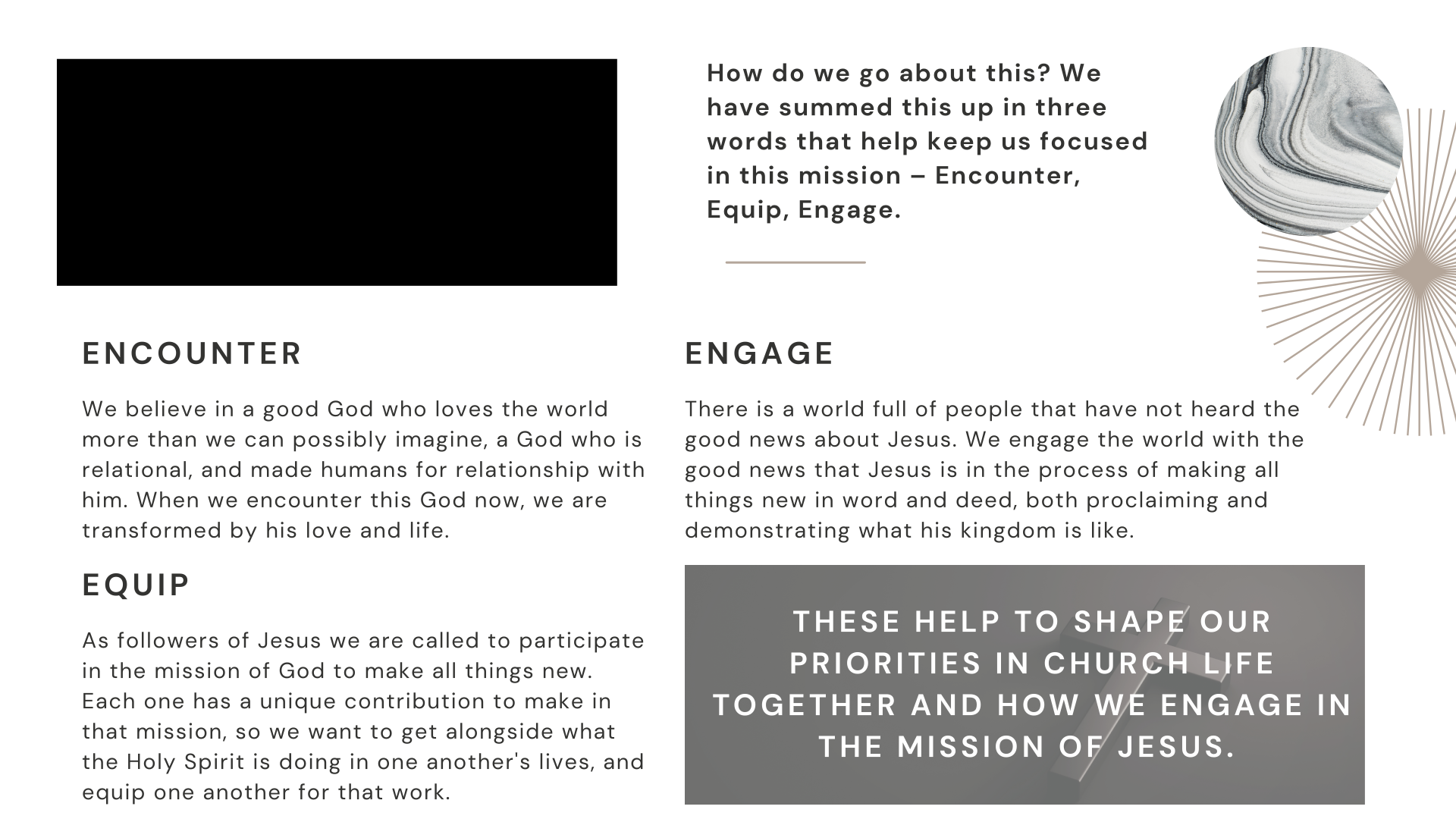
God is a relational God who calls us to encounter him together. As dearly loved children of the Father, he calls us to experience him together. Sunday mornings, Worship Nights and Second Tuesday prayer nights are times that we set apart for encountering God together. We don’t take attendance registers, but we believe these are vital times where we gather as the united community of God’s people, declaring his goodness, experiencing his presence, and being formed in our faith in Jesus.
Making Disciples
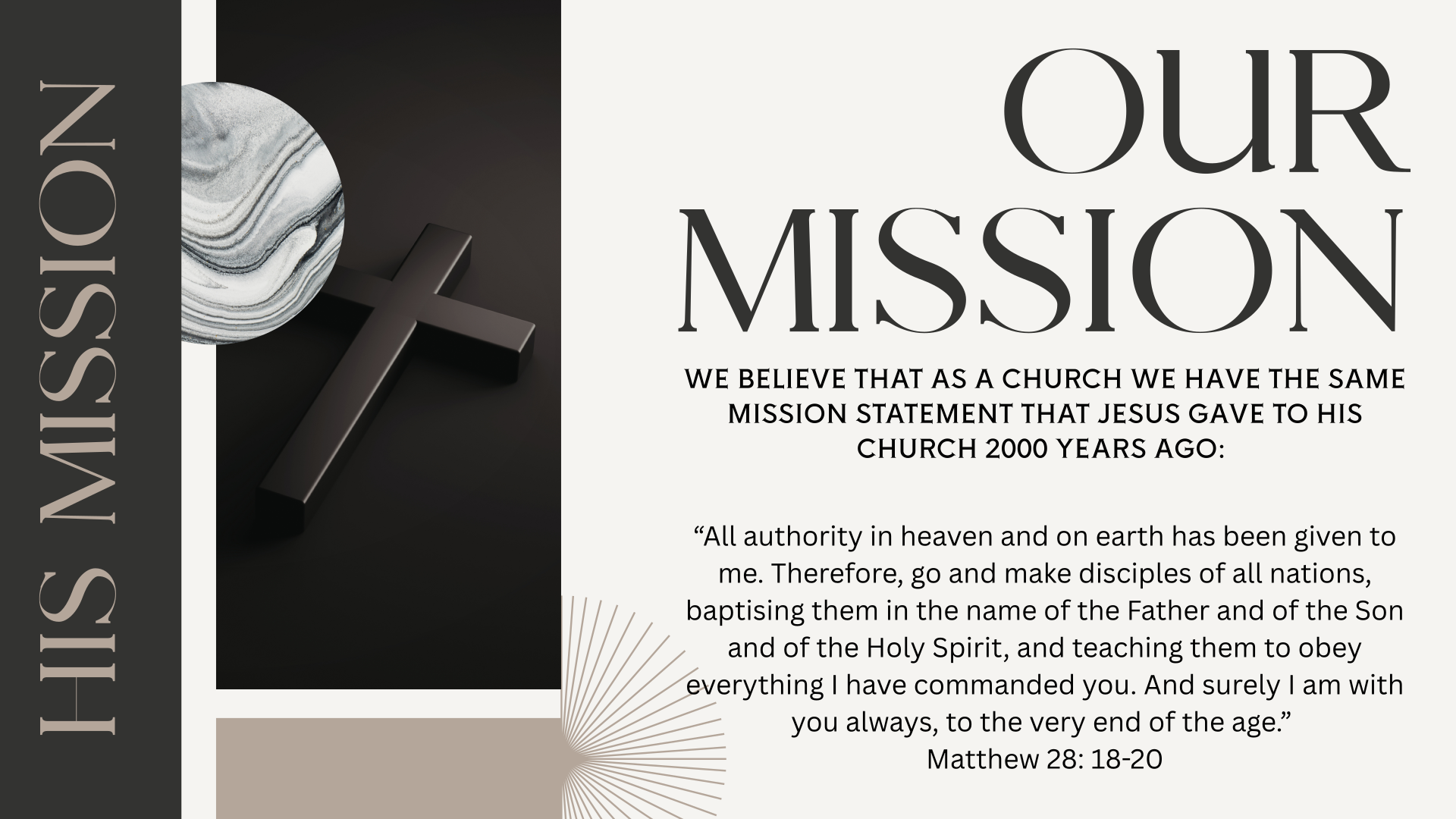
The mission of the church is the same as it has always been: to make disciples of Jesus. Our mission is to make disciples, not of us, but of Jesus. This means that we bring the good news of the kingdom to those who don’t yet believe in Jesus and, as they come to a place of faith in Jesus, we walk with them through a process of growth into maturity as functioning members of the Church. Each disciple gets to participate in the multiplication of the life of Jesus and his kingdom.
Life Groups
Sunday gatherings are great, but do not fulfil all the descriptions of Jesus-centred community in the New Testament. We encourage everyone that’s part of Hope to be actively committed to a life group – a genuine community of interconnected relationships that help one another to grow towards maturity in Jesus in all parts of our lives. Life groups are the main place where equipping for the mission of Jesus happens, as we apply to our lives what God reveals of himself through the Word. They are places where we share the real stuff of our lives with one another, in relationships of trust and care. And life groups are also a primary way that we participate in the mission of Jesus together, as we invite those who don’t know Jesus to come and experience the life of his people.
The Holy Spirit
When Jesus ascended, he promised that he would not leave his followers alone but would send the Holy Spirit. He kept his promise at Pentecost. The Spirit brings change, new life and power into our lives. If we are to be formed into the image of Jesus and participate in the mission of God, we need the Spirit. We believe in the empowering filling of the Spirit and his ongoing work among us. The Spirit brings demonstrations of the kingdom, and “produces fruit” in our lives, the fruit of love, joy, peace, patience, kindness, goodness, faithfulness, gentleness and self-control (Galatians 5: 22-23) – all of which looks like Jesus!
Leadership
Leadership in the church is to be modelled on Jesus, not the leadership of culture. Leadership in the church is not a position to be achieved, but a function where people act as servants and good stewards of what belongs to Jesus. The New Testament gives us two forms of this kind of leadership, elders and deacons. At Hope we have an eldership, who carry the ultimate accountability to Jesus and responsibility of care for the church. We also have ministry leaders who take responsibility for different areas of service; some of these are deacons, who have extra responsibilities. Crucial to the life of the church are the life group leaders who take care of our smaller communities within the church. All of our leading is shaped by Jesus’ words: “The Son of man did not come to be served but to serve, and to give his life as a ransom for many.”
Justice
As God’s people, rescued by Jesus and empowered by the Holy Spirit, we are called to stand against injustice, both on an individual level and on a larger scale where there are whole systems that perpetuate injustice . We are called to embody the heart of God by loving the vulnerable, often characterised in the Bible as the widow, the orphan, the poor, and the foreigner. Proverbs 31 says it very clearly: “Speak up for those who cannot speak for themselves, for the rights of all who are destitute. Speak up and judge fairly; defend the rights of the poor and needy.” Wherever we see what is missing or broken, we believe that we are called to reflect the heart of God, with no expectation of anything in return.
Generosity
God created humans to be receiver-givers that demonstrate his generosity by sharing with one another and creation. We believe that generosity and giving are a fundamental part of our discipleship to Jesus, and a principle of the kingdom of God. In giving generously with everything that we have and are, we get to experience the joy of taking part in what God is doing in the world. The result of this kind of life is that there is “more than enough”! You will be enriched in every way so that you can be generous on every occasion, and through us your generosity will result in thanksgiving to God. (2 Cor 9: 11)
Sacraments: Baptism and the Lord’s Supper
There are two practices that Jesus commanded his church to continue: baptism and the Lord’s Supper. Both of these embody and reenact how the good news transforms the lives of those who belong to Jesus by faith. Baptism is a living picture of how those who give their lives to Jesus are united to him in his death and resurrection, and now live a new life in him. The Lord’s Supper is a simple meal of bread and wine, which Jesus commanded us to take to remember his broken body and poured-out blood in his sacrifice on the cross. We do this every time we gather, to remember his death until he returns.